Track 2: Biochar for Livestock and Animal Farming
It is important to note that this adsorption is non-selective: at excessive doses, biochar may also bind beneficial feed components such as vitamins and amino acids. This is why every recommended inclusion rate has an upper limit.
2. Rumen Fermentation Control and Methane ReductionTogether, these two benefits add up to substantial cost savings for farms managing several thousand head. As carbon accounting begins to enter the reporting of livestock enterprises, methane reduction itself is also taking on an asset-like value.
3. Ammonia Control in Bedding and Improved Indoor Environment
When biochar is blended into livestock bedding with rice straw or wood chips, its high CEC and adsorption capacity capture ammonium nitrogen and markedly reduce ammonia volatilization (by up to about 35%), improving indoor air quality and lowering the incidence of respiratory disease. Because the spent bedding is rich in nutrients, it can be returned to farmland as a high-value organic fertilizer, closing the nutrient loop.
A review of 112 scientific publications (covering literature up to 2019) found predominantly positive effects of biochar on parameters including toxin adsorption, digestion, blood parameters, feed efficiency, meat quality, and greenhouse gas emissions; although some individual studies reported statistically non-significant results, the overall trend was positive. Even so, outcomes vary markedly with feedstock and thermochemical processing conditions, which is why choosing the right type of biochar is equally important.
With its porous adsorption structure, cation exchange capacity (CEC), and redox properties, biochar can be applied across four stages of the livestock chain: feed additives, ruminant methane reduction, livestock bedding, and manure and water treatment. The table below summarizes the mechanisms, application methods, dosage, and quantified effects for each stage.
| Application Area | Mechanisms, Application Methods, and Quantified Effects |
| Feed Additive |
Adsorbs intestinal toxins; forms a mucosal protective layer; modulates rumen hydrogen sinks; Pigs: 3% inclusion (five-month trial); ruminants: recommended at 0.05%–0.3% of dietary dry matter; Pig slaughter weight +15.45 kg per head; sharp decline in intestinal disease incidence. |
|
Ruminant Methane Reduction |
Regulates rumen hydrogen metabolism and microbial electron transfer; added to the diet; Enteric methane reduced by 6%–12%; feed conversion improved by 3%–8%; Saves feed costs and generates a verifiable emissions reduction. |
| Livestock Bedding |
Captures ammonium nitrogen through cation exchange capacity (CEC), suppressing ammonia volatilization; Laid as a mixture of biochar with rice straw or wood chips; Ammonia volatilization in poultry houses reduced by up to 35%; Spent bedding made into high-value organic fertilizer, closing the nutrient loop. |
| Manure and Water Treatment |
Composting/biogas slurry additive: improves compost quality and reduces nitrogen loss; Recirculating aquaculture systems: water conditioning and microbial ecosystem development; Biofilter: removes 40%–60% of nitrate; adsorbs phosphorus and certain toxic metals. |
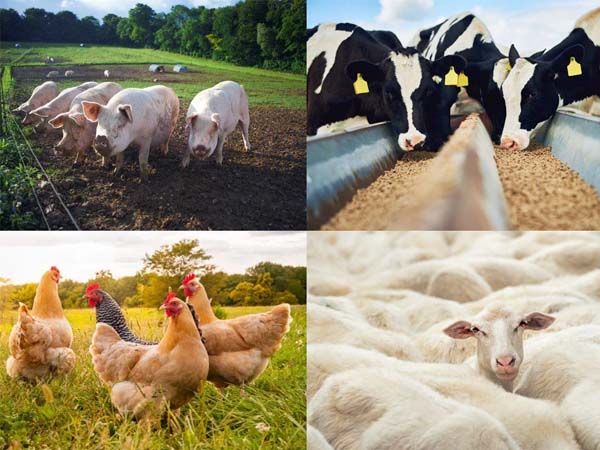
Results by Animal Species: different species respond to biochar through different pathways, and the effect indicators cannot be compared directly across species.
| Animal | Main Pathway | Effect Indicators | Dosage Reference |
| Pigs | Toxin adsorption + gut barrier | Slaughter weight +15.45 kg per head; significant decline in intestinal disease | 3% (controlled trial) |
| Beef / Dairy Cattle | Rumen fermentation control, hydrogen sink substitution | Enteric methane −6%~12%; feed conversion +3%~8% | About 0.05%–0.3% of dietary dry matter |
| Poultry | Bedding ammonia control + feed adsorption | Bedding ammonia volatilization −35%; lower respiratory disease incidence | Mainly blended into bedding |
| Sheep | Rumen fermentation control | Consistent with the overall ruminant trend; magnitude varies with diet | About 0.05%–0.3% of dietary dry matter |
| Aquaculture | Water conditioning, microbial support | Lower stress, improved water quality, supports microbial communities | Set according to water body and feed system |
Product Requirements and Safety Limits
In addition, biochar properties depend heavily on feedstock and process: wood-based biochar has a high specific surface area and low ash content, offering stronger adsorption but at higher cost, while manure- or straw-based biochar is richer in nutrients but carries greater contaminant and salinity risks. Feed-grade biochar generally demands tighter quality consistency; excessive variation within or between batches directly undermines the repeatability of feeding programs.
The variable on the cost side is how biochar is purchased or produced. Large farms that install small pyrolysis units to process their own manure and bedding can create an internal “farming–pyrolysis–reuse” loop, turning biochar from a procurement cost into a waste-disposal benefit, a model particularly attractive in regions under strong manure-management pressure.
Synergy with the Agricultural Sector