Limestone-based CO2 Removal Technology
The voluntary carbon market drives the demand for carbon removal technologies. Direct Air Capture (DAC) systems for CO₂ represent a pivotal carbon removal technology. As a supplier of anaerobic calcination technology, SIMEC has undertaken a number of international scientific research projects to advance the development of DAC technology. This paper primarily presents SIMEC’s completed research on Limestone-Based CO₂ Adsorption and Desorption Technology.
Limestone-based CO₂ Direct Air Capture (DAC) is an effective carbon removal technology. This technology utilizes calcium carbonate (CaCO₃), an abundant mineral on Earth, to directly capture carbon dioxide (CO₂) from the air. The captured CO₂ is then stored or converted into value-added products, thereby reducing the concentration of greenhouse gases in the atmosphere and supporting climate change mitigation efforts. SIMEC’s high-temperature calcination reactor is powered by renewable electricity and is capable of directly capturing a high-purity CO₂ stream. The CO₂ produced from the calcination reactor can be stored in geological reservoirs or via mineralization processes.
SIMEC’s anaerobic calcination technology enables efficient and cost-effective removal of carbon dioxide from limestone. In the initial stage, calcium carbonate (CaCO₃) is fed into a high-temperature reactor. Inside the reactor, CaCO₃ decomposes into calcium oxide (CaO) and carbon dioxide (CO₂) at approximately 900 °C under atmospheric pressure.
Once carbon dioxide is separated from limestone, the remaining calcium oxide (CaO) can react with water to form calcium hydroxide, a process known as calcium oxide hydration. Alternatively, it can be directly exposed to air, which is referred to as natural hydration. Hydration is an exothermic reaction, thus providing a viable approach for heat recovery.
The generated calcium hydroxide (Ca(OH)₂) is used as the adsorbent material in the carbon capture step of the DAC system. When exposed to ambient air, this adsorbent material reacts with CO₂ to regenerate calcium carbonate (CaCO₃).
Subsequently, calcium carbonate can be reused like a sponge:
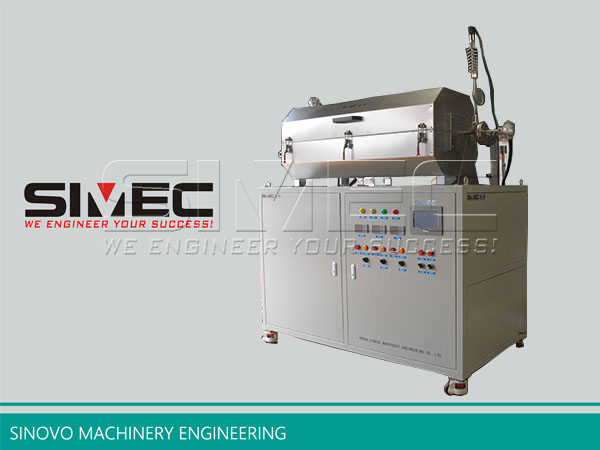
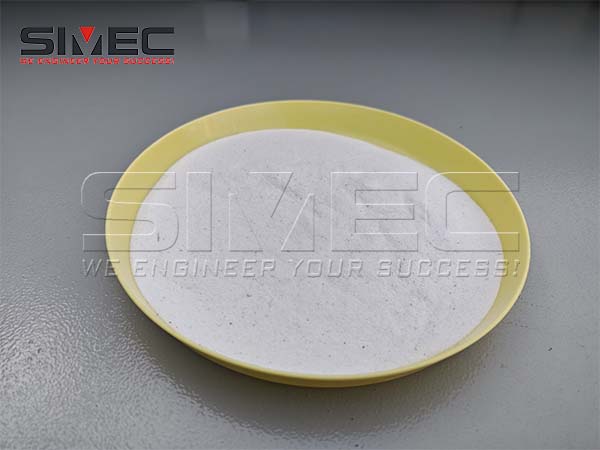
The core of a DAC system’s operation lies in CO₂ adsorption and desorption technology. The anaerobic calcination process, which enables the adsorbent to release high-concentration CO₂ gas, constitutes the primary energy-consuming step of the DAC system. By integrating renewable electricity and heat recovery technology, SIMEC has innovatively developed and validated a low-energy-consumption DAC system. Below, we will share a brief summary of our research findings through a simple example, without violating the confidentiality clauses.
December 8, 2025, the anaerobic calcination experiment of limestone was conducted in a tubular pyrolysis apparatus. The experiment was designed to investigate the optimal heating rate and duration time.
Raw material: a sample of ground limestone (calcium carbonate) in dry powder form.
Priority data to be acquired:
Record the flow of released gas streams and gas compositions.
Check the energy consumption of the anaerobic calcination process.
Check the mass and quality of collected solid.
Check the CO2 collection yield and gas purity.
Experimental process notes:
Limestone is primarily composed of calcium carbonate (CaCO₃), which undergoes thermal decomposition (calcination) under oxygen-free, high-temperature conditions to produce calcium oxide (CaO) and carbon dioxide (CO₂). This reaction is endothermic and requires a continuous supply of high temperature to overcome the reaction activation energy. The oxygen-free environment prevents side reactions (e.g., oxidation) between calcium carbonate and oxygen, ensuring that the decomposition reaction proceeds in a unimodal manner.
Reaction Conditions: 950 °C is the optimal temperature for calcium carbonate decomposition (with a decomposition temperature range of approximately 898 °C – 1000 °C). Sustaining this temperature for 25 minutes ensures the complete decomposition of most CaCO₃ (for larger particles, the duration may need to be extended to guarantee sufficient internal reaction).
Based on the experimental data and analysis, the parameters of anaerobic calcination can be adjusted to lower temperatures or shorter residence time to reduce costs. Improving production efficiency while reducing production costs is the direction for the continuous improvement of SIMEC technology.
Limestone-based CO₂ Direct Air Capture (DAC) is an effective carbon removal technology. This technology utilizes calcium carbonate (CaCO₃), an abundant mineral on Earth, to directly capture carbon dioxide (CO₂) from the air. The captured CO₂ is then stored or converted into value-added products, thereby reducing the concentration of greenhouse gases in the atmosphere and supporting climate change mitigation efforts. SIMEC’s high-temperature calcination reactor is powered by renewable electricity and is capable of directly capturing a high-purity CO₂ stream. The CO₂ produced from the calcination reactor can be stored in geological reservoirs or via mineralization processes.
SIMEC’s anaerobic calcination technology enables efficient and cost-effective removal of carbon dioxide from limestone. In the initial stage, calcium carbonate (CaCO₃) is fed into a high-temperature reactor. Inside the reactor, CaCO₃ decomposes into calcium oxide (CaO) and carbon dioxide (CO₂) at approximately 900 °C under atmospheric pressure.
CaCO3 + Heat → CaO + CO2
Once carbon dioxide is separated from limestone, the remaining calcium oxide (CaO) can react with water to form calcium hydroxide, a process known as calcium oxide hydration. Alternatively, it can be directly exposed to air, which is referred to as natural hydration. Hydration is an exothermic reaction, thus providing a viable approach for heat recovery.
CaO + H2O → Ca(OH)2
The generated calcium hydroxide (Ca(OH)₂) is used as the adsorbent material in the carbon capture step of the DAC system. When exposed to ambient air, this adsorbent material reacts with CO₂ to regenerate calcium carbonate (CaCO₃).
Ca(OH)2 + CO2 → CaCO3
The reaction process by which calcium hydroxide reacts with carbon dioxide in the ambient air to form calcium carbonate can take several years under natural conditions. By adopting advanced technologies, we can accelerate this natural property, shortening the time required for carbon dioxide absorption from several years to less than three days.
Subsequently, calcium carbonate can be reused like a sponge:
- Releasing carbon dioxide through anaerobic calcination to complete CO₂ capture and storage (CCS);
- Hydrating CaO to produce Ca(OH)₂ for heat recovery;
- Reabsorbing carbon dioxide from the ambient air by Ca(OH)₂ to revert to calcium carbonate.
December 8, 2025, the anaerobic calcination experiment of limestone was conducted in a tubular pyrolysis apparatus. The experiment was designed to investigate the optimal heating rate and duration time.
Raw material: a sample of ground limestone (calcium carbonate) in dry powder form.
Priority data to be acquired:
Record the flow of released gas streams and gas compositions.
Check the energy consumption of the anaerobic calcination process.
Check the mass and quality of collected solid.
Check the CO2 collection yield and gas purity.
Experimental process notes:
Limestone is primarily composed of calcium carbonate (CaCO₃), which undergoes thermal decomposition (calcination) under oxygen-free, high-temperature conditions to produce calcium oxide (CaO) and carbon dioxide (CO₂). This reaction is endothermic and requires a continuous supply of high temperature to overcome the reaction activation energy. The oxygen-free environment prevents side reactions (e.g., oxidation) between calcium carbonate and oxygen, ensuring that the decomposition reaction proceeds in a unimodal manner.
Reaction Conditions: 950 °C is the optimal temperature for calcium carbonate decomposition (with a decomposition temperature range of approximately 898 °C – 1000 °C). Sustaining this temperature for 25 minutes ensures the complete decomposition of most CaCO₃ (for larger particles, the duration may need to be extended to guarantee sufficient internal reaction).
| Product Type | Specific Substance | Key Characteristics |
| Gas | Carbon Dioxide (CO₂) | High purity; acidic; non-flammable |
| Solid | Calcium Oxide (CaO) | White powder; strong water absorbency; corrosive |
Based on the experimental data and analysis, the parameters of anaerobic calcination can be adjusted to lower temperatures or shorter residence time to reduce costs. Improving production efficiency while reducing production costs is the direction for the continuous improvement of SIMEC technology.
© Copyright of articles and pictures on this site belongs to SIMEC. Any company, media, website or individual are not allowed to reprint, reproduce, repost, modify or use in other ways without permission. Otherwise SIMEC will have the right to pursue legal responsibilities.